

“रामो विग्रहवान् धर्मः”
“Lord Shri Ram is the embodiment of Dharma.”
Ayodhya is no longer just an ancient city; it has become the spiritual capital of India and one of the world’s most important pilgrimage destinations. The magnificent Shri Ram Janmabhoomi Mandir has filled millions of hearts with pride and devotion. Every devotee who visits Ayodhya feels blessed to witness this historic transformation.
However, building a grand temple is only the first step. Now our responsibility is to build a city that truly reflects the ideals of मर्यादा पुरुषोत्तम श्रीराम—a city that is clean, green, disciplined, compassionate, and welcoming to every devotee.
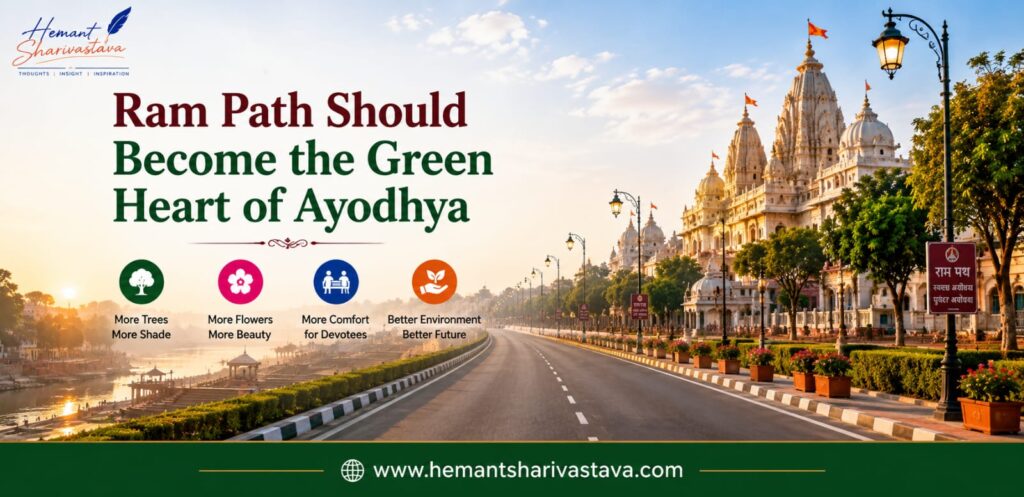
Ram Path Should Become the Green Heart of Ayodhya .
Ram Path is beautifully developed, but one thing is clearly missing—greenery ,during summer, the entire stretch becomes extremely hot ,without sufficient trees and shade, the road appears dry and concrete-heavy. In many ways, it resembles cities in desert regions where greenery is limited.
A city dedicated to Lord Ram should inspire peace and freshness. Thousands of native shade trees, flowering plants, vertical gardens, landscaped dividers, and decorative parks should be developed along the entire Ram Path. Beautiful fountains, floral gardens, resting areas, and shaded walkways can transform Ram Path into one of the world’s finest spiritual boulevards.
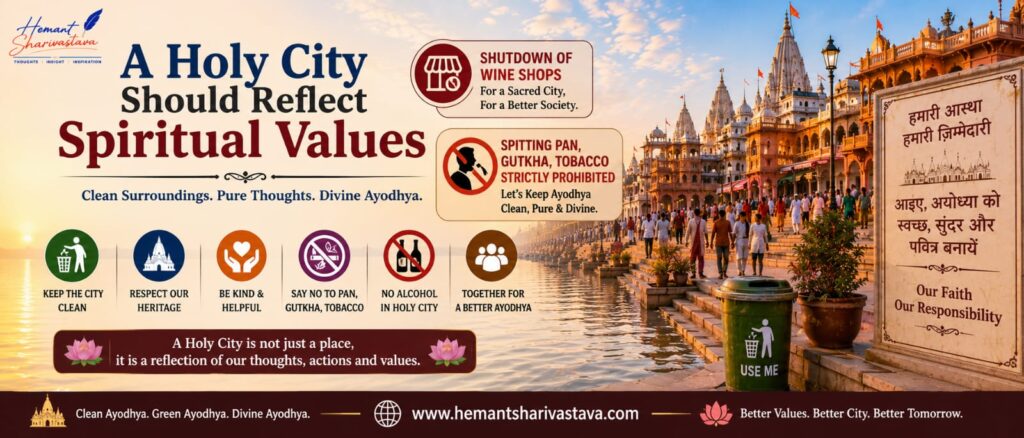
A Holy City Should Reflect Spiritual Values.
During my visit, I noticed liquor shops operating near important roads leading towards the temple, including areas around Niyawan Chauraha, Amaniganj, and Gulab Bari Crossing.
While these businesses may be legally permitted, their presence near one of Hinduism’s holiest pilgrimage cities raises an important question. A city that welcomes millions of devotees should preserve an atmosphere that reflects spirituality and reverence.
Similarly, paan stains, gutka, tobacco use, and public spitting continue to affect the beauty of Ram Path. Strong enforcement, awareness campaigns, designated disposal bins, and strict penalties can greatly improve cleanliness.
“स्वच्छता ही सेवा है।”
Cleanliness Must Continue Day and Night.
Ayodhya now receives lakhs of pilgrims every day. Cleanliness can no longer be an occasional activity—it must become a 24×7 mission.
During my visit, I observed mechanical road-cleaning machines operating without sufficient water and cleaning only one side of the road. Their performance should be regularly monitored so that roads are properly washed and cleaned.
The Municipal Corporation should work in three dedicated shifts:
- 12 AM – 8 AM
- 8 AM – 4 PM
- 4 PM – 12 AM
Roads, footpaths, drains, Ram Path, parking areas, public toilets, and temple surroundings should remain clean throughout the day.

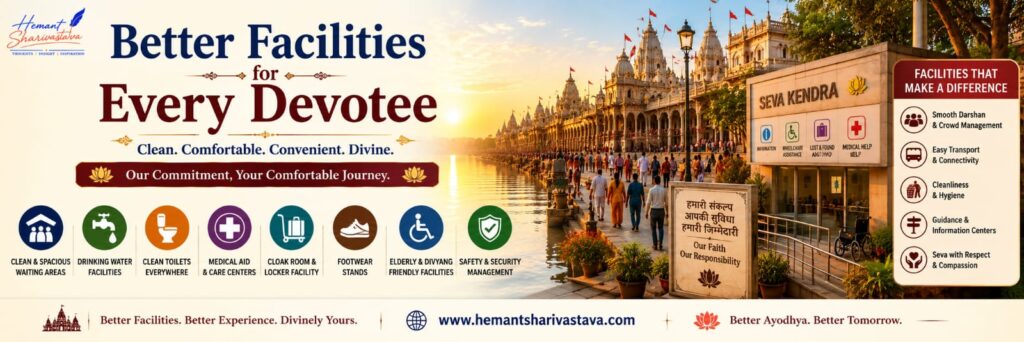
Better Facilities for Every Devotee .
A spiritual city becomes truly great when it cares for every visitor , Senior citizens, differently-abled devotees, pregnant women, children, and people with medical conditions deserve special attention. Wherever technically feasible, elevators or assisted transport systems should be considered to make access easier for elderly and sick devotees.
More shaded seating, purified drinking water stations, mobile charging points, medical kiosks, lost-and-found centres, and information desks should be available across Ayodhya.
Modern public toilets should be installed every few hundred metres and maintained with continuous cleaning. During festivals, portable sanitation facilities can prevent overcrowding and improve hygiene.
Ram Ki Paidi and Sarayu Ghats Deserve More Care.
Ram Ki Paidi is one of Ayodhya’s most beautiful spiritual destinations ,some areas near water pumping motors and technical installations should be properly fenced for safety and aesthetics. Ghats should be cleaned several times a day, decorative lighting should be enhanced, and more flower gardens, seating areas, and shaded spaces should be created ,the Sarayu riverfront deserves the same level of attention as the temple itself.

Old Ayodhya Must Grow Along with New Ayodhya.
Development should not remain limited to Ram Path , the older colonies, historic chowks, traditional markets, temples, dharamshalas, and residential areas should also receive equal attention.
Many internal roads need improvement. Drains require modernization. Underground electrical wiring, heritage lighting, clean footpaths, organised parking, decorative facades, and beautiful public spaces can completely transform these historic neighbourhoods.
Every colony should have parks, flowering plants, community gardens, children’s play areas, and regular cleanliness drives.
The old city carries Ayodhya’s real history, and preserving it is just as important as building the new.

Volunteers Can Become Ayodhya’s Greatest Strength.
One of the most inspiring experiences during my visit was seeing the compassionate service provided by the Sathya Sai operated medical clinic, where volunteers were helping devotees with dedication.
Ayodhya should invite more NGOs, hospitals, educational institutions, youth organisations, and charitable trusts to contribute through:
- Free medical camps
- Drinking water distribution
- Wheelchair assistance
- Crowd management
- Lost-and-found services
- Emergency response
- Cleanliness drives
- Tree plantation campaigns
“सेवा परमो धर्मः” — Service is the highest duty.

A Few More Steps Towards a World-Class Ayodhya.
Ayodhya can become an international model for pilgrimage cities by introducing:
- Plastic-free pilgrimage zones.
- Large-scale tree plantation across the city.
- Uniform heritage-style shop signboards.
- Electric shuttle buses.
- Better traffic management.
- QR-based digital tourist information.
- Smart waste bins at regular intervals.
- Automatic drinking water vending machines.
- Rainwater harvesting.
- Underground utility cables.
- Regular restoration of old temples and heritage buildings.
- Beautiful murals depicting the Ramayana.
- Weekly cleanliness and volunteer campaigns involving citizens.
Our Collective Responsibility .
The grandeur of Shri Ram Mandir has inspired the world. Now it is time to make every road, every colony, every ghat, every market, and every corner of Ayodhya equally inspiring.
A clean city, green landscapes, disciplined civic management, compassionate facilities, and respect for heritage will ensure that Ayodhya remains a symbol of faith for centuries to come.
“यत्र धर्मः तत्र जयः”
“Where there is Dharma, there is victory.”
Let Ayodhya become not only the home of a magnificent temple but also the world’s finest spiritual city—where devotion, cleanliness, compassion, nature, and culture walk together.
“स्वच्छ अयोध्या • हरित अयोध्या • दिव्य अयोध्या”
This is not just a dream; it is our collective responsibility towards Bhagwan Shri Ram and future generations.