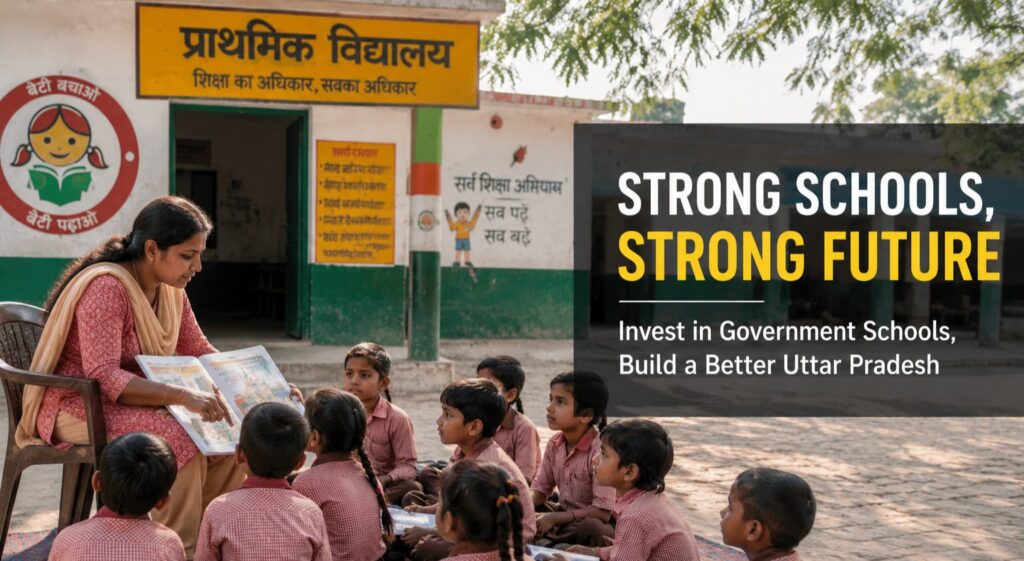
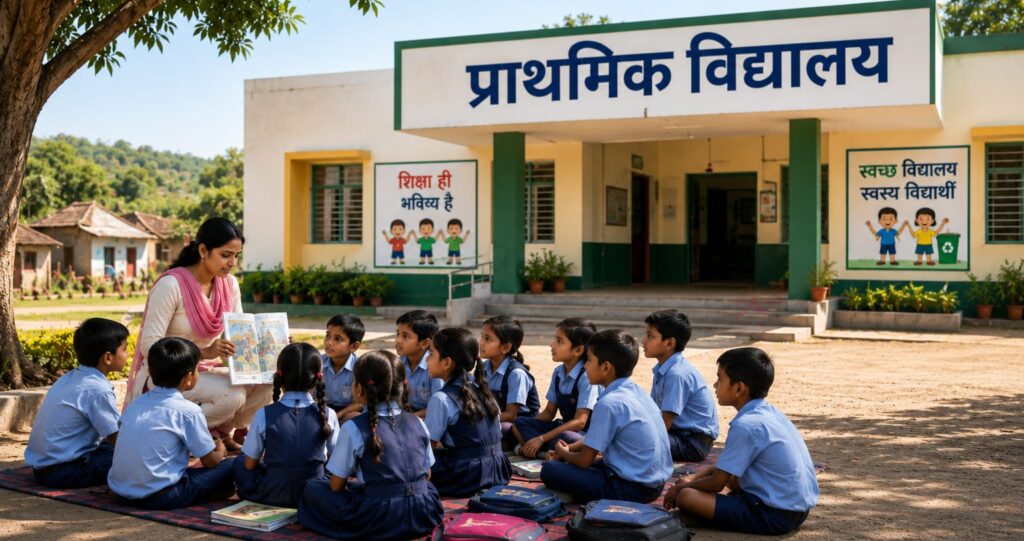
Education is the foundation of any strong nation. Unfortunately, in Uttar Pradesh, lakhs of qualified teaching aspirants are still waiting for recruitment opportunities while thousands of teaching positions remain vacant in government schools.
For the last seven years, a large number of B.Ed., BTC, D.El.Ed., diploma holders, and other teacher training qualified candidates have been preparing and waiting for government teaching vacancies. Every year, nearly 2.5 to 3 lakh students complete teacher training courses with the dream of becoming teachers. However, the pace of recruitment has been much slower than the number of qualified candidates entering the system.
As of June 2026, around 60,000 teacher positions are reported to be vacant in Basic Education Council schools in Uttar Pradesh. Broader estimates also suggest that total vacancies across primary, secondary, and higher education institutions could exceed 85,000 to 90,000 positions in the coming years.
The Ground Reality – The concern is not only unemployment among qualified teachers but also the condition of many government primary and middle schools.
Several schools continue to face challenges such as :
- Shortage of teachers .
- Multi-grade teaching in a single classroom .
- Lack of subject-specific teachers .
- Weak digital infrastructure .
- Limited sports facilities .
- Poor sanitation in some areas .
- Insufficient focus on practical and skill-based learning
- Declining public confidence in government schools .
As a result, many parents feel compelled to send their children to expensive private schools, even when it places a significant burden on household finances.
The generation born during the 1980s and 1990s largely studied in government schools. Many from this generation later became officers, engineers, doctors, bankers, teachers, entrepreneurs, and successful professionals. This proves that government schools can produce excellent results when proper resources and quality teaching are available.
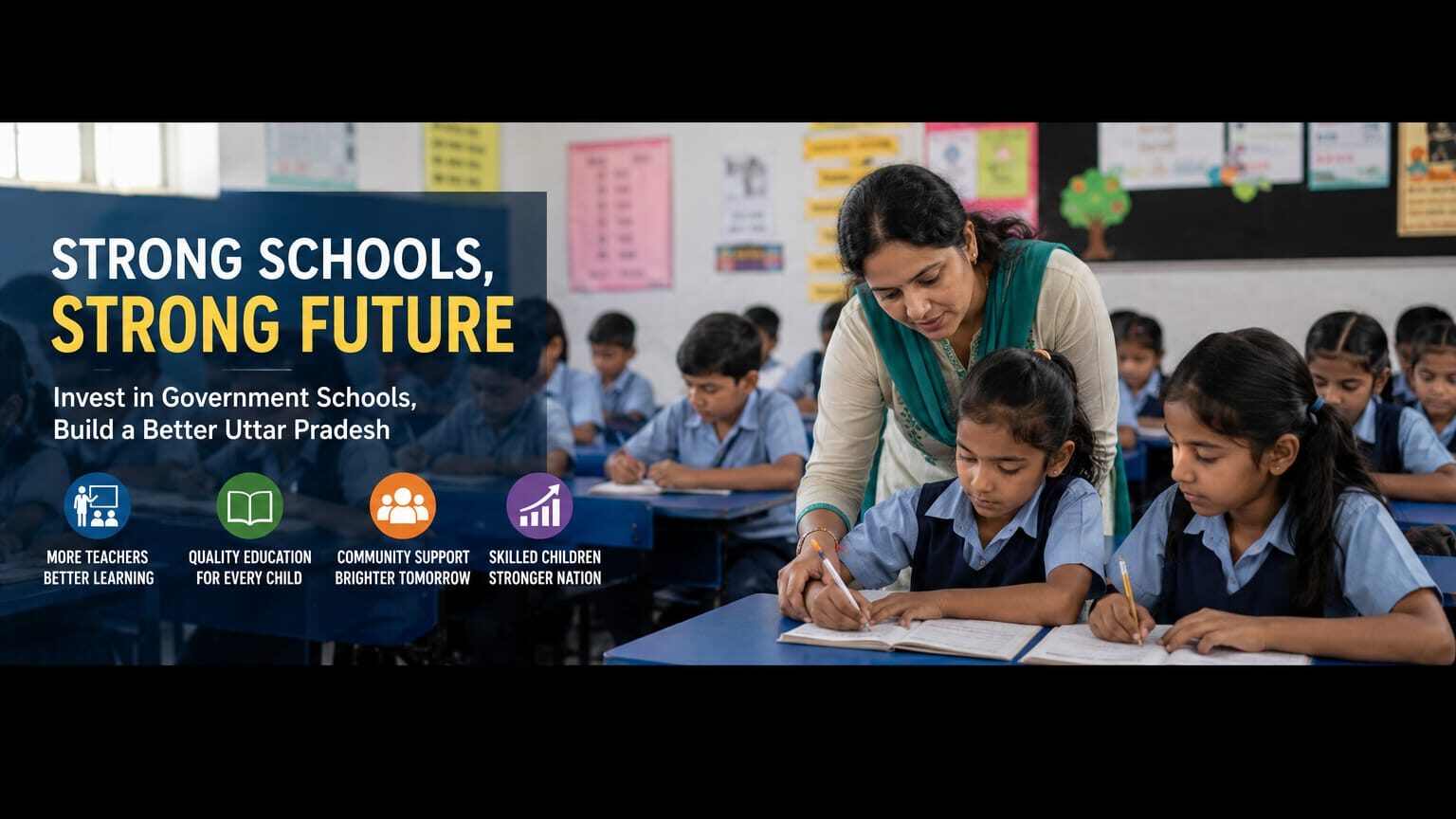
Creating More Teaching Opportunities –
One practical solution could be to increase the number of teaching positions while maintaining financial discipline , instead of allocating higher salaries to a limited number of teachers, the government may consider recruiting more teachers with moderate starting salaries, especially in rural and semi-urban areas.
For example, a salary of ₹30,000–₹35,000 per month in a teacher’s home district or village can provide a respectable livelihood while allowing the government to appoint more educators within the same budget.
Such a model could:
- Reduce unemployment among qualified youth .
- Improve student-teacher ratios .
- Strengthen rural education .
- Reduce migration to large cities .
- Improve learning outcomes .
Need for Specialized Teachers . Modern education requires expertise in multiple fields.
Schools should gradually introduce:
- Computer Teachers (B.Tech, M.Tech, BCA, MCA qualified)
- Sports Teachers
- Music and Arts Teachers
- Health and Nutrition Educators
- Skill Development Trainers
- Career Counsellors
This would allow students to receive guidance from professionals in specific fields and help them discover their talents early in life.
Community Volunteers and Expert Participation –
Another practical and low-cost solution is to involve community volunteers in the education system.
Many retired teachers, government officers, bankers, defence personnel, engineers, doctors, professors, and other experienced professionals are willing to contribute to society after retirement. Similarly, working professionals can dedicate a few hours every month to guide students in their areas of expertise.
Schools can introduce a structured “Volunteer for Education” programme where experts conduct sessions on:
- Career guidance
- Financial literacy
- Digital skills
- Science and innovation
- Health and nutrition
- Personality development
- Competitive examination awareness
- Environmental conservation
- Sports and fitness
Retired educators can help students who need additional academic support, while industry experts can provide practical exposure and career insights. Such participation can significantly improve educational quality without creating a major financial burden on the government.
Education should not be viewed solely as the responsibility of teachers and government departments. Society, professionals, and local communities can also play an important role in shaping future generations.
Improving Infrastructure Through Public Participation , School development should not depend entirely on government funding.
Support can come through:
- Corporate CSR initiatives
- Banks and PSUs
- NGOs and charitable organizations
- Public donations
- Village participation
- School adoption programmes
Such partnerships can help develop digital classrooms, libraries, computer labs, playgrounds, and modern learning facilities.

Key Reforms Needed , Better School Facilities – Every school should have clean classrooms, drinking water, electricity, playgrounds, and high-quality toilet facilities for both boys and girls.
Mandatory Participation by Government Officials – A policy encouraging government officials and employees to enroll their children in government schools could significantly improve accountability and quality standards.
Skill Development from Primary Classes – Students should learn computer literacy, communication skills, financial awareness, practical science, problem-solving, and basic entrepreneurship from an early age.
Practical and Competitive Learning – The education system should focus more on projects, innovation, critical thinking, and real-life applications rather than rote memorization.
Digital Education –Government schools should be gradually equipped with smart classrooms, internet connectivity, and modern digital learning tools.
Stronger Parent and Community Engagement –Regular interaction between teachers, parents, village committees, and local communities can improve monitoring, accountability, attendance, and overall school performance.
A Solution for Both Education and Employment – Large-scale teacher recruitment can address two major challenges simultaneously—improving education quality and reducing unemployment among qualified youth.
Filling vacant teaching positions will :
- Provide employment opportunities to lakhs of trained candidates
- Improve learning outcomes
- Increase confidence in government schools
- Reduce dependence on costly private education
- Strengthen rural communities
- Create a more skilled future workforce .
Teacher recruitment should be viewed as an investment rather than an expense. Uttar Pradesh has an opportunity to strengthen its education system while also providing employment to thousands of deserving candidates.
A stronger focus on primary and middle schools, timely recruitment, better infrastructure, specialized teachers, community participation, and volunteer support can help create a more educated, skilled, and confident generation.
Strong government schools are essential for a strong society, and the time has come to place them at the center of educational reforms. If implemented effectively, these measures can simultaneously address educational challenges, improve learning outcomes, and provide meaningful employment opportunities to lakhs of aspiring teachers across Uttar Pradesh .