
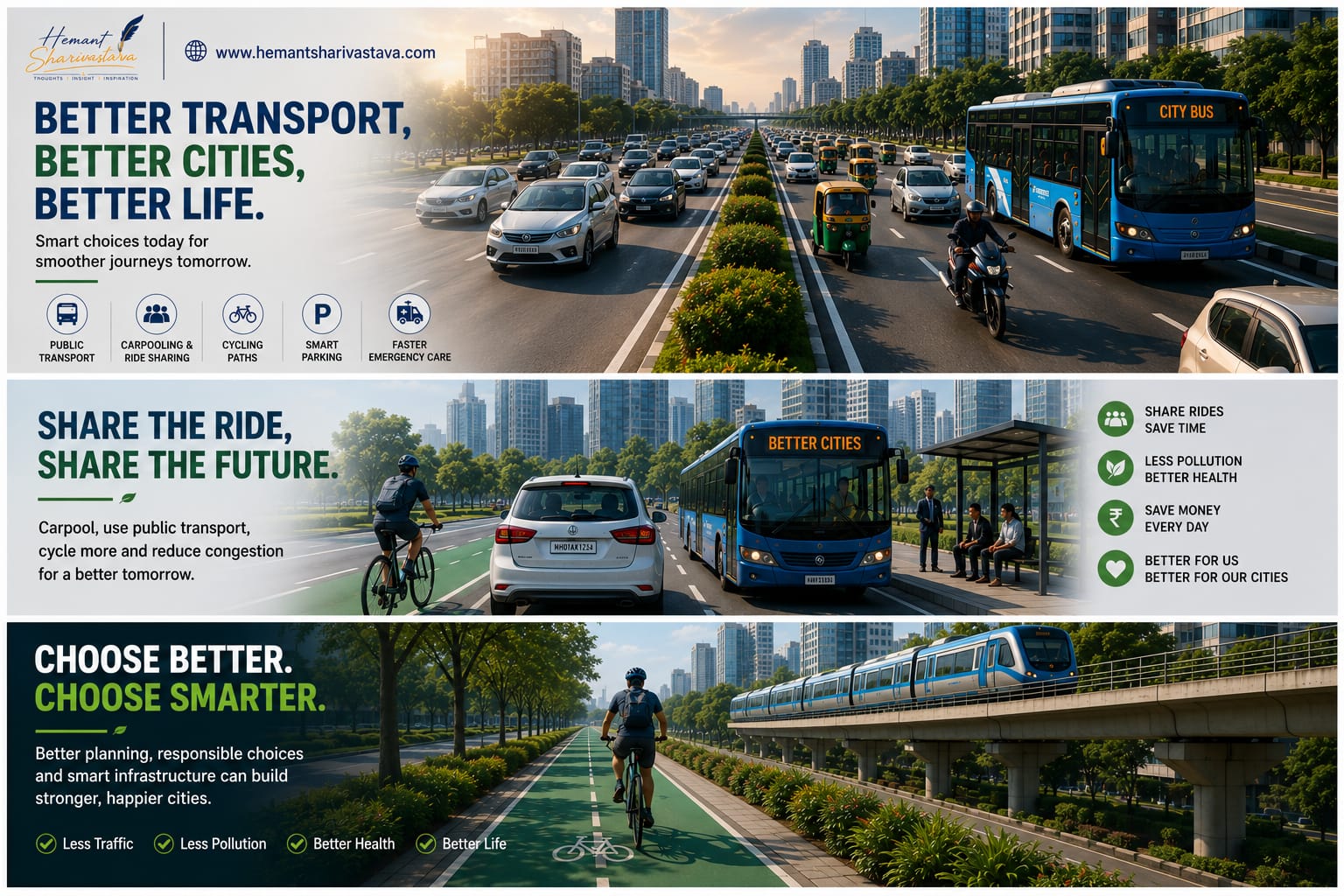
Traffic congestion has become one of the biggest problems in our cities today. Whether it is a short trip to the market, daily office travel, or an emergency situation, people are spending more time on roads than ever before. Along with traffic jams, rising pollution, fuel wastage, road rage, and delayed emergency services are affecting the quality of life of millions of people.
The problem is not simply the increasing number of vehicles. It is also the result of inadequate public transport, poor parking management, roadside encroachments, weak enforcement of traffic rules, and limited awareness among road users.
One of the most effective solutions is strengthening public transport. Many cities once had a much stronger bus network than they have today. Increasing the number of city buses, improving service frequency, introducing more electric buses, and expanding metro connectivity can encourage people to leave their personal vehicles at home. Public transport should be affordable, reliable, and conveniently connected to residential and commercial areas.
Carpooling can also make a significant difference. Every day, thousands of vehicles travel with only one passenger. Society-level and corporate carpool initiatives can help reduce the number of vehicles on roads. Inter-city ride-sharing services similar to BlaBlaCar should be actively promoted. Dedicated carpool lanes, toll benefits, or recognition programs can encourage more people to participate.
Cycling is another practical solution that remains largely underutilized. Cities should develop uninterrupted cycling tracks that are free from encroachments and connect residential areas with schools, markets, and workplaces. Safe cycling infrastructure can reduce traffic while improving public health and reducing pollution.
Roadside vendors and carts are an important part of urban life and provide livelihoods to many families. However, they should operate from designated vending zones rather than occupying roads and footpaths. Properly planned vending areas can benefit both vendors and commuters by improving traffic flow while protecting livelihoods.
Parking management requires urgent attention. New commercial buildings, shopping complexes, and large establishments should be required to provide adequate basement or dedicated parking facilities. Illegal roadside parking consumes valuable road space and contributes significantly to congestion. Multi-level parking facilities should be encouraged in busy markets and commercial districts.
Emergency vehicles should always receive priority. Dedicated emergency corridors, smart traffic signals, and stronger public awareness can help ambulances and fire services reach their destinations faster. Blocking an ambulance should attract strict penalties because every minute can be critical in saving lives.
Traffic discipline must also improve. Higher fines for dangerous driving, stricter action against repeat offenders, suspension of licenses for serious violations, and greater use of technology for monitoring can help create safer roads. Enforcement should be fair, transparent, and consistent.
Awareness and positive incentives can be just as effective as penalties. Residential societies, companies, schools, and communities that actively support traffic management, carpooling, road safety, and public transport usage should receive recognition. Governments can also explore incentives such as small tax benefits, reward programs, or public appreciation for organizations and individuals contributing to reduced congestion.
Technology can further improve traffic management through smart traffic signals, integrated transport systems, digital parking solutions, and real-time traffic monitoring. Such measures can make travel more efficient and reduce unnecessary delays.
Traffic congestion is not a problem that can be solved by building more roads alone. It requires better planning, stronger public transport, responsible driving habits, improved parking infrastructure, promotion of carpooling and cycling, and active participation from citizens. If governments, businesses, residential communities, and individuals work together, our cities can become cleaner, safer, and far more efficient places to live and travel.
The goal should be simple: fewer vehicles carrying more people, better public transport, safer roads, faster emergency response, and a transportation system that serves everyone efficiently.
We all need to follow the mentioned points so that we all can benefit. Great write up Hemant highlighting the major concerns effecting all our pilgrimage cities.