Northern India is known for its rich and diverse food culture. From the kebabs of Lucknow, chole bhature of Delhi, parathas of Punjab, kachoris of Uttar Pradesh, to countless sweets and street foods, the region offers an incredible variety of dishes. Every city and town has its own specialty, making Northern India a paradise for food lovers.
However, despite its amazing food culture, hygiene remains a major concern in many areas.
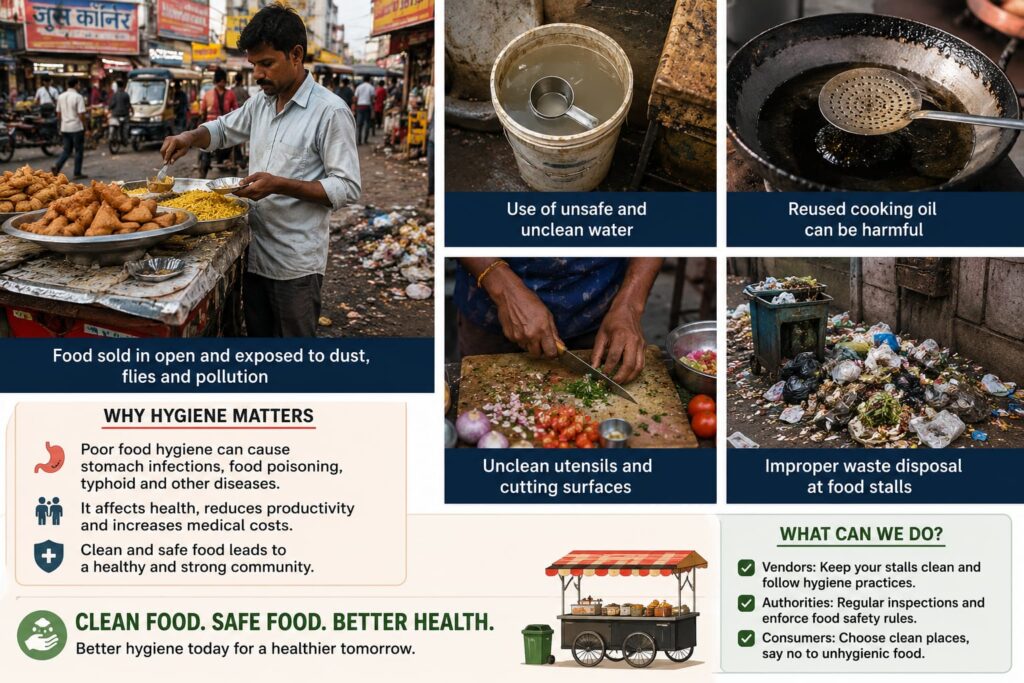
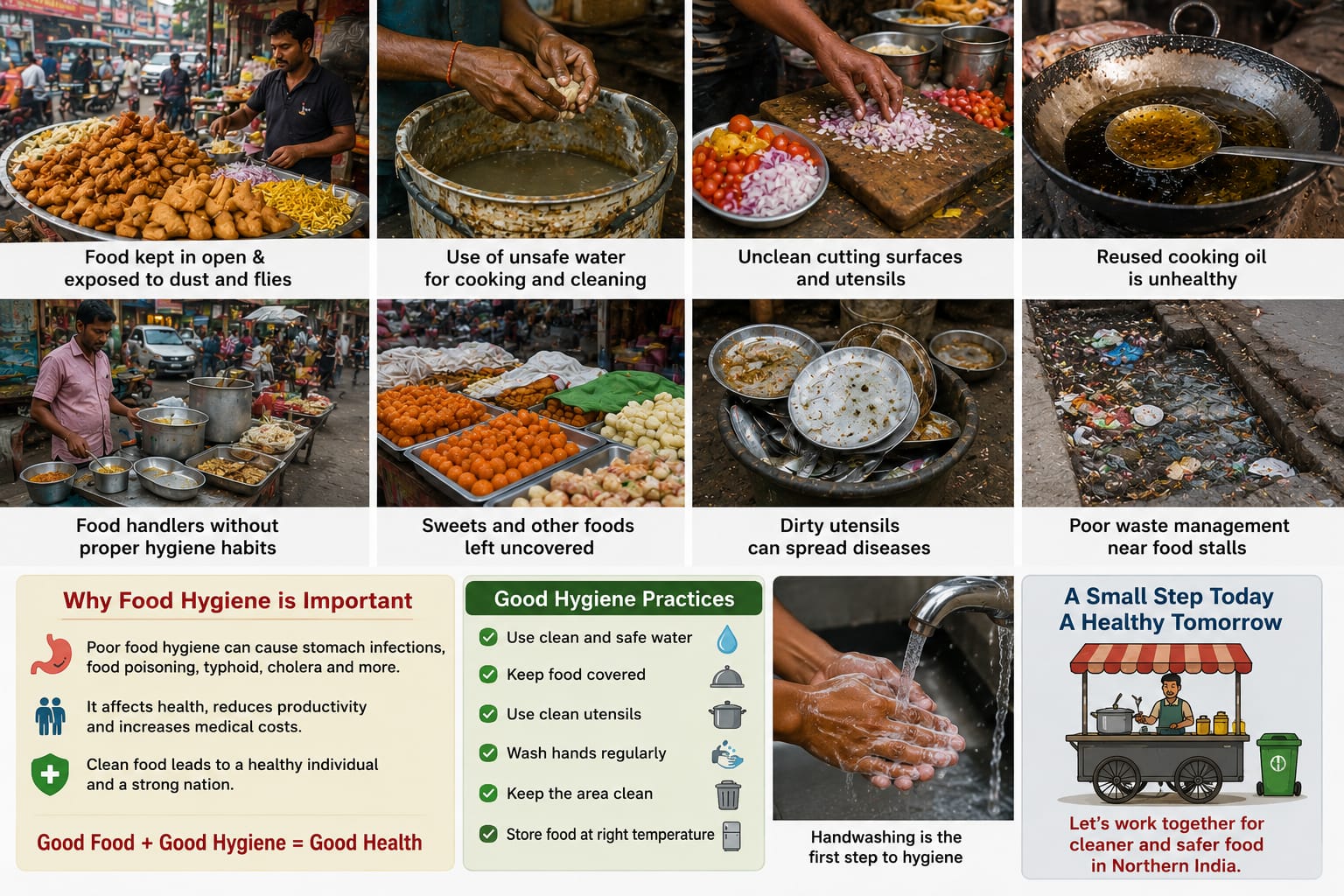
A common sight in many markets is food being sold in the open, exposed to dust, flies, traffic pollution, and extreme weather conditions. Many roadside vendors and small eateries operate in limited spaces where access to clean water and proper sanitation is a challenge. Food is sometimes stored for long hours without adequate protection, especially during the hot summer months when temperatures can exceed 40°C.
One of the biggest concerns is the lack of awareness about food safety. In many places, utensils are not cleaned properly, cooking oil is reused multiple times, and waste is not disposed of hygienically. Consumers often focus more on taste and price than cleanliness, which allows poor hygiene practices to continue.
The consequences can be serious. Food-borne illnesses, stomach infections, diarrhea, typhoid, and other health problems affect thousands of people every year. These issues not only impact public health but also increase healthcare costs and reduce productivity.
The good news is that the situation can improve. Better awareness among food vendors, stricter enforcement of food safety rules, access to clean water, and responsible consumer choices can make a significant difference. Customers should support vendors and restaurants that maintain cleanliness and follow proper hygiene standards.
Northern India already has one of the finest food traditions in the world. The region does not need more food varieties—it already has an abundance of them. What is needed is a stronger focus on cleanliness, food safety, and hygiene. By combining great taste with better hygiene practices, Northern India can become a model for safe and enjoyable food experiences.
After all, food should not only satisfy our taste buds—it should also protect our health.