
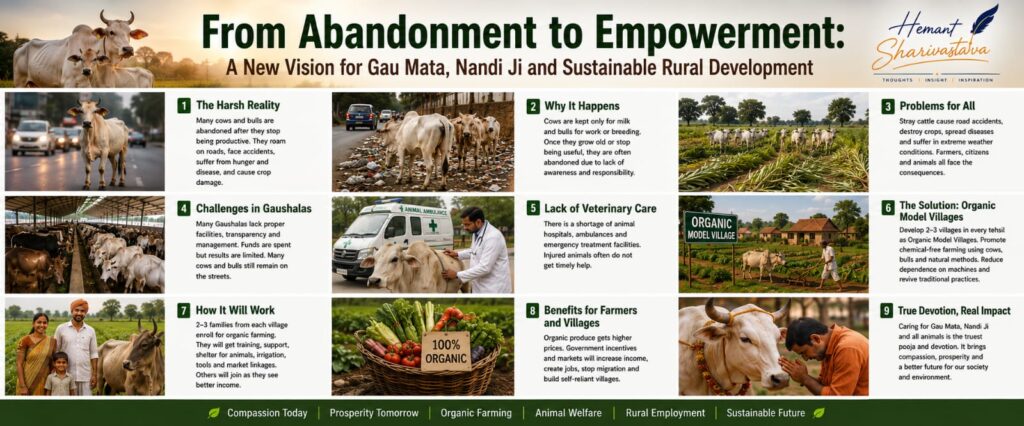
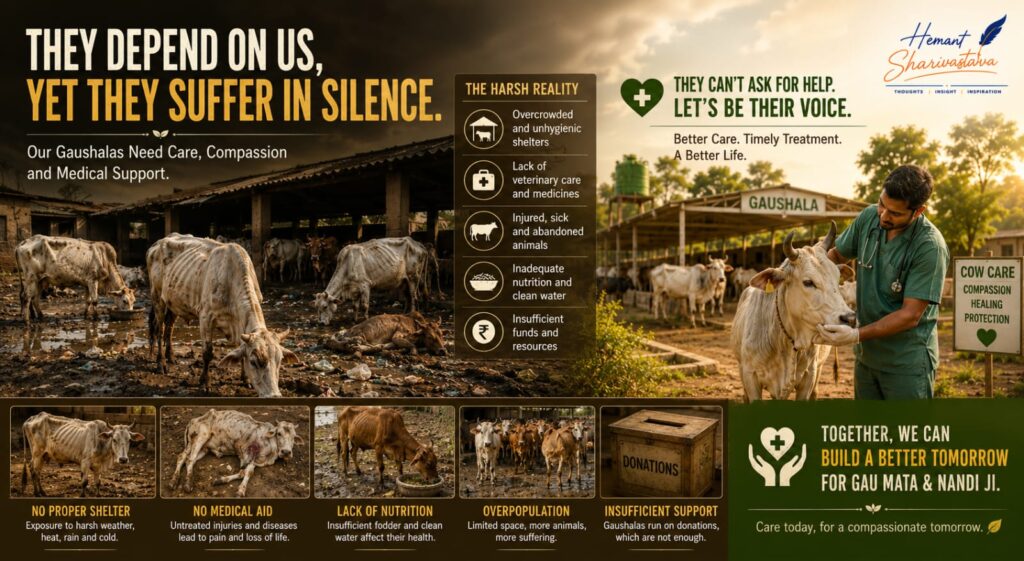
In our country, cows are respected as “Gau Mata” and are considered sacred by millions of people , Nandi Ji, the sacred bull, is also deeply revered in our traditions and temples. However, the reality on our roads, streets, and villages tells a different story. Every day, thousands of cows and bulls can be seen wandering without food, water, shelter, or medical care , They are involved in road accidents, suffer injuries, and often destroy farmers’ crops while searching for food.
One of the main reasons behind this problem is that many people keep cows only as long as they produce milk , Bulls are also kept while they are useful for farming or breeding. Once these animals become old or stop being economically useful, they are often abandoned. The same animals that once provided income and support to families are left to survive on their own.
This situation creates problems for everyone ,Farmers suffer crop losses due to stray cattle. Road accidents increase as animals roam freely on highways and city roads. The animals themselves suffer from hunger, disease, injuries, and harsh weather conditions.
Although there are many Gaushalas in different parts of the country, their effectiveness remains a concern. Large amounts of money are allocated through grants and donations, but many shelters lack proper facilities, transparency, and accountability. Some exist only on paper, while others struggle due to poor management. As a result, many cows and bulls continue to remain on the streets despite the availability of funds.
Another major issue is the shortage of veterinary hospitals, animal ambulances, and emergency treatment facilities. Injured animals are often left unattended because proper medical infrastructure is unavailable, especially in rural areas.
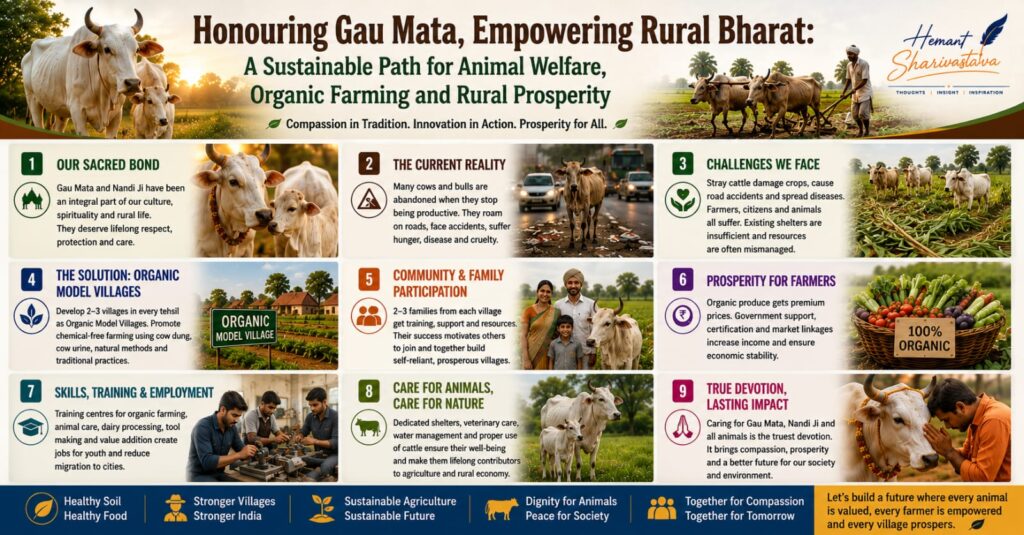
Instead of treating stray cattle as a burden, we should view them as a valuable resource. A long-term solution could be the development of dedicated Organic Model Villages in every tehsil. At least two or three villages in each tehsil can be developed as centres of traditional and organic farming.
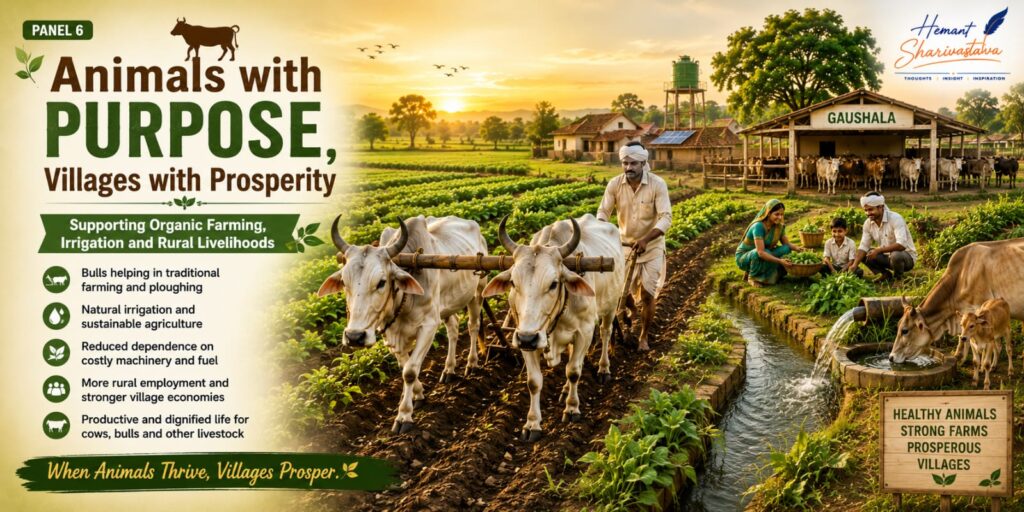
These villages should promote chemical-free agriculture. The use of chemical fertilizers and pesticides should be minimized, while natural manure prepared from cow dung and cow urine can be encouraged. Bulls, buffaloes, and other animals can be used for ploughing, transportation, irrigation, and other farming activities, reducing dependence on expensive machines. Such villages can also gradually reduce the use of large agricultural machinery and revive traditional farming practices that generate more rural employment.
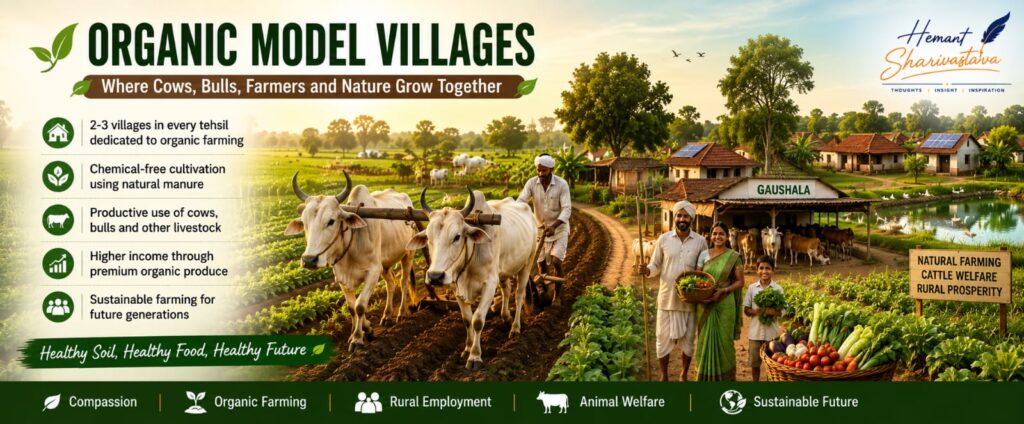
Families already living in these villages can be encouraged to enroll in the Organic Farming Program. Initially, 2-3 families from each village can be selected and provided with training, financial support, animal shelters, irrigation facilities, organic farming tools, and market linkages. As these families become successful and earn higher incomes through organic farming, other villagers can also be motivated to join the program. This gradual approach will help create sustainable Organic Model Villages while ensuring community participation and long-term success.
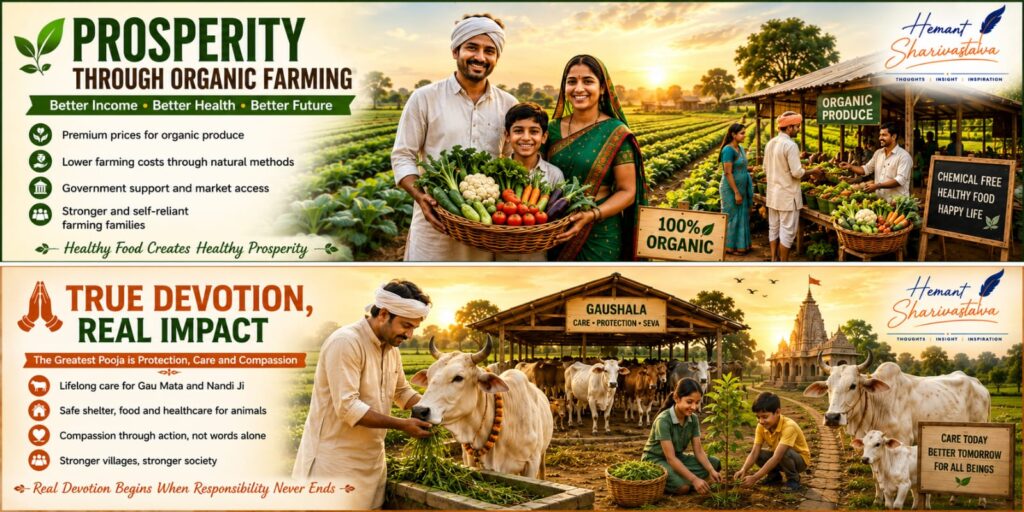
Farmers producing organic crops can receive premium prices in the market because consumers are increasingly willing to pay more for healthy and chemical-free food. The government can further support these farmers through subsidies, direct incentives, certification assistance, and dedicated marketplaces for organic produce.
Training centres can also be established to teach traditional farming techniques, animal husbandry, organic fertilizer production, dairy processing, water conservation, and the manufacturing of agricultural tools. Local youth and labourers can be trained to create farming equipment, handicrafts, dairy products, and other value-added products. This would generate employment opportunities within villages and reduce migration to cities in search of work.
Dedicated cattle shelters can be integrated into these villages so that abandoned cows and bulls can continue contributing to agricultural activities throughout their lives. Water management systems, irrigation facilities, transportation activities, and farming operations can be designed to make productive use of cattle while ensuring their proper care and welfare.
Such villages can become models of sustainable development where agriculture, animal welfare, environmental protection, and rural employment work together. They would help preserve traditional farming practices, produce healthier food, provide dignity to animals, strengthen village economies, and reduce dependence on chemicals and machines.
This model can transform stray cattle from a challenge into an opportunity. It can improve farmers’ incomes, generate rural employment, promote organic food production, reduce migration to cities, and provide a dignified life to cows, bulls, buffaloes, and other domestic animals that have supported rural society for generations.
If we truly consider cows as our mothers, then our responsibility should not end with worship alone. Real respect means ensuring their safety, healthcare, shelter, and meaningful role in society throughout their lives. By creating sustainable systems that value both animals and farmers, we can transform a growing problem into an opportunity for rural development, environmental protection, and social welfare.
This approach would not only protect cows and bulls but also benefit buffaloes and other domestic animals that have long supported rural life. Such efforts would be a true and meaningful form of worship, devotion, and gratitude towards Gau Mata, Nandi Ji, and all animals that contribute to our lives. Real devotion is not limited to rituals, offerings, or festivals—it is reflected in how we care for, protect, and provide dignity to these animals throughout their lives.
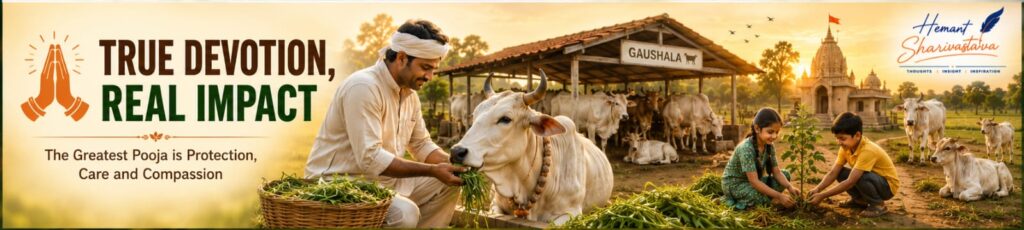
The true measure of our devotion is not how loudly we praise Gau Mata and Nandi Ji, but how responsibly we care for them when they can no longer serve our immediate needs. That would be the most impactful and sincere form of pooja, seva, and devotion.
आयुधानाम् अहम् वज्रम् धेनूनाम् अस्मि कामधुक् ।प्रजनश्चास्मि कन्दर्पः सर्पाणाम् अस्मि वासुकिः |
अर्थ:
भगवान श्रीकृष्ण कहते हैं कि— मैं शस्त्रों में वज्र हूँ, गाय (धेनु) में कामधेनु (सुरभि) हूँ, उत्पत्ति के कारणों में कामदेव हूँ और सर्पों में वासुकि हूँ ।