
During my daily travels across cities, towns, and even rural areas, one noticeable trend has been the rapid increase in roadside vendors. Tea stalls, food carts, paan and tobacco kiosks, vegetable sellers, chaat vendors, golgappa stalls, snack counters, fruit carts, juice points, and many other small businesses have become a common sight on almost every road and market corner.
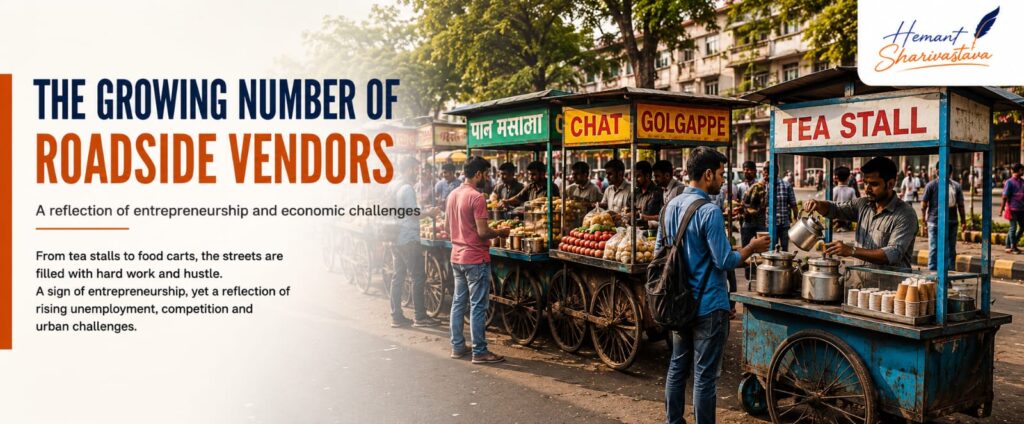
At first glance, this may appear to be a positive development. After all, these individuals are working hard to earn an honest livelihood rather than remaining unemployed. Their efforts represent the spirit of entrepreneurship, self-employment, and determination. Many of these vendors support entire families through their small businesses and contribute to local economies.
However, the continuously increasing number of such roadside establishments also raises important questions about employment opportunities, urban planning, and public infrastructure.
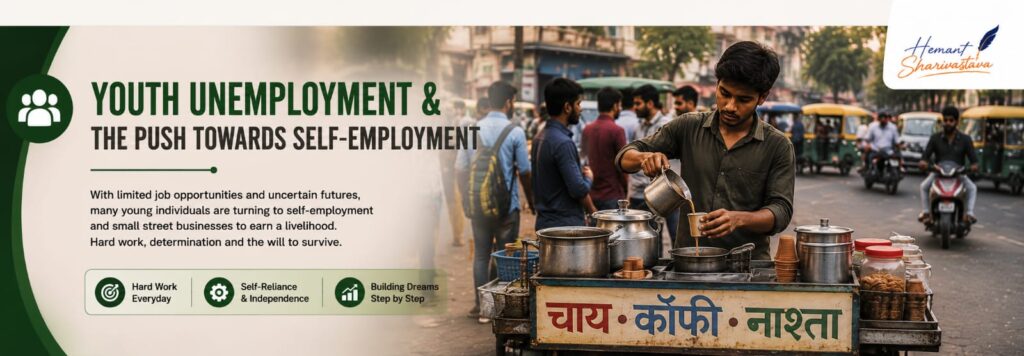
A Sign of Rising Employment Challenges :
The growing presence of street vendors often indicates that a significant number of people, especially youth, are struggling to find stable employment opportunities in the formal sector. Many educated and semi-educated individuals are unable to secure jobs matching their qualifications and are therefore turning towards self-employment.
While entrepreneurship should always be encouraged, the increasing dependence on informal roadside businesses may also reflect gaps in industrial growth, manufacturing opportunities, skill-based employment, and organized sector job creation.
Intense Competition Among Vendors :
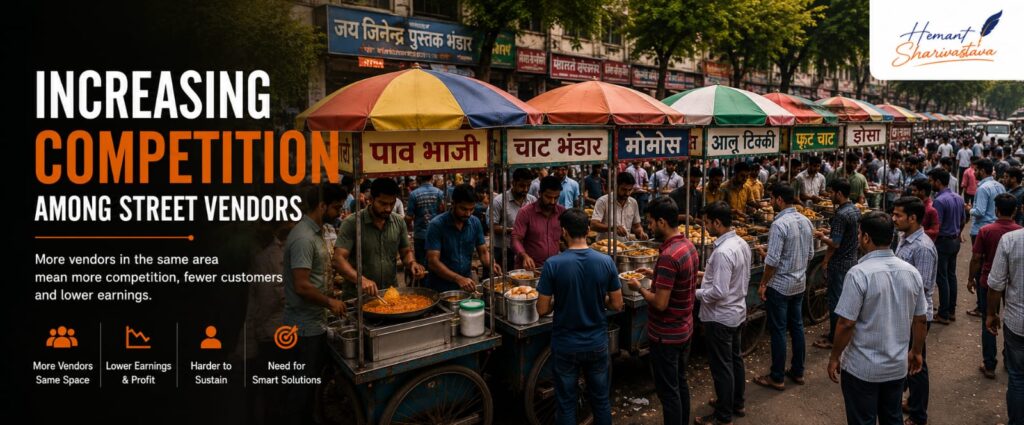
With more people entering similar businesses, competition has become extremely intense. In many locations, several tea stalls, food carts, or golgappa vendors can be found operating within a few meters of each other.
This excessive concentration often leads to:
- Reduced earnings per vendor.
- Price wars and lower profit margins.
- Difficulty in sustaining long-term business.
- Financial insecurity for families dependent on these small enterprises.
As a result, many vendors work long hours yet struggle to generate adequate income.
Lack of Dedicated Vending Zones :
One of the biggest challenges in India is the shortage of properly planned vending zones. In many cities, vendors are forced to operate on footpaths, road shoulders, near markets, outside offices, hospitals, schools, and transport hubs.
The absence of designated spaces creates multiple problems:
- Encroachment on pedestrian pathways.
- Reduced road width for vehicles.
- Traffic congestion during peak hours.
- Safety risks for both customers and commuters.
- Difficulties for emergency vehicles.
Dedicated vending markets and organized hawker zones can help balance livelihoods with public convenience.
Traffic Congestion and Public Inconvenience :
Popular food and tea stalls often attract large crowds. Customers park motorcycles and cars haphazardly near these locations, further worsening traffic flow.
Common consequences include:
- Traffic bottlenecks.
- Increased travel time.
- Higher fuel consumption.
- Increased risk of accidents.
- Difficulty for pedestrians to walk safely.
In busy urban areas, even a small roadside gathering can significantly impact overall traffic movement.
Hygiene and Public Health Concerns :
Another important issue is hygiene. Many vendors operate in open environments exposed to dust, vehicle emissions, garbage accumulation, and nearby drainage or sewage systems.
Potential concerns include :
- Food contamination due to dust and pollution.
- Exposure to flies and insects.
- Lack of clean water facilities.
- Improper waste disposal.
- Limited access to handwashing arrangements.
- Risk of food-borne illnesses.
While many vendors maintain cleanliness to the best of their ability, the surrounding environment often makes hygiene management difficult.
Waste Management Challenges ;
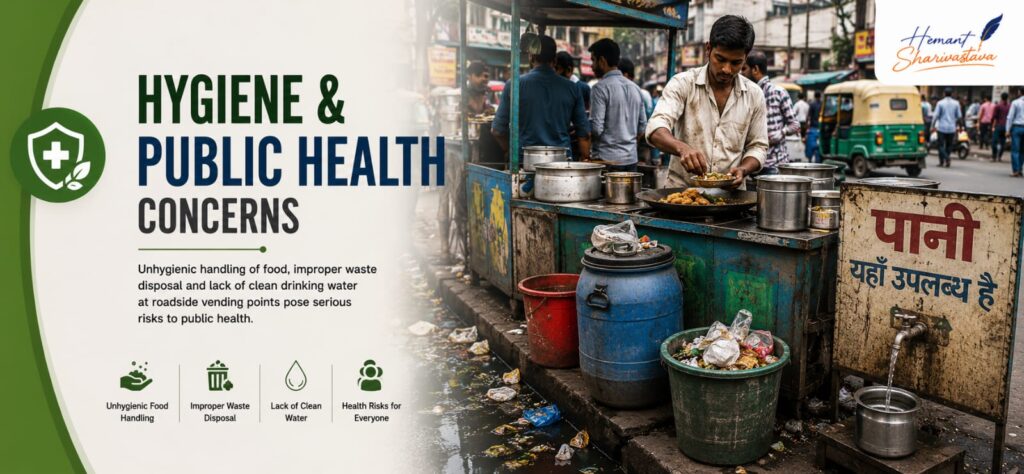
Disposable cups, plastic packaging, paper plates, food leftovers, and other waste frequently accumulate around vending locations , Without proper waste collection systems, these areas may experience:
- Littering.
- Blocked drains.
- Unpleasant odors.
- Increased pest activity.
- Environmental pollution.
A structured waste-management mechanism is essential for maintaining cleanliness around such commercial zones.
The Need for Balanced Solutions , The objective is not to criticize roadside vendors or discourage entrepreneurship. In fact, these individuals deserve appreciation for creating opportunities for themselves and serving local communities.
However, policymakers and urban planners must work towards :
- Creating dedicated vending zones.
- Providing access to clean water and sanitation facilities.
- Ensuring proper waste disposal systems.
- Offering skill-development and employment opportunities.
- Improving urban planning and traffic management.
- Supporting vendors through licensing and regulation.
- Promoting food safety and hygiene standards.
The increasing number of roadside vendors is both a symbol of India’s entrepreneurial spirit and a reflection of broader economic realities. These small businesses provide livelihoods to thousands of families and contribute significantly to local economies. At the same time, their rapid growth highlights challenges related to employment, urban planning, traffic management, hygiene, and public infrastructure.
The need of the hour is not to restrict such livelihoods but to create an ecosystem where entrepreneurship can flourish in an organized, safe, hygienic, and sustainable manner. With proper planning and support, both vendors and the public can benefit, creating cleaner cities, smoother traffic flow, and better economic opportunities for all.